

02 Sep From Stark to Snug: How to Layer Indoor Lighting for a Cozy Atmosphere
We have all walked into a room that just felt right. It wasn’t necessarily the expensive furniture or the high-end rug that made the difference; it was likely the lighting. Conversely, we’ve all been in rooms that felt like a sterile hospital waiting area—cold, flat, and uninviting. The secret to bridging that gap lies in the art of layering.
Lighting is often the unsung hero of interior design. While paint colors and furniture arrangements get all the glory, your lighting choices dictate the mood, functionality, and perceived size of a space. Relying on a single overhead fixture is a common mistake that leaves rooms feeling one-dimensional. To create a truly warm and inviting home, you need to blend different light sources to create depth and interest.
Whether you are looking to update your current setup or are planning a renovation in Salt Lake City, understanding the three layers of illumination—ambient, task, and accent—is essential. In this guide, we will walk you through how to combine these elements to transform your house into a cozy sanctuary.
The Three Pillars of Layered Lighting
Think of lighting like a winter outfit. You wouldn’t just wear a t-shirt in a snowstorm, nor would you just wear a heavy coat indoors. You layer pieces for comfort and function. Indoor lighting works the same way. A well-lit room balances three distinct types of light.
1. Ambient Lighting: The Foundation
Ambient lighting is the base layer. It provides the general illumination that allows you to move around a room safely. In many homes, this comes from recessed cans, track lighting, or a central ceiling fixture. While essential, relying only on ambient light often results in a flat, uninspiring look.
To keep things cozy, consider swapping out harsh fluorescent bulbs for soft white LEDs. If your current setup involves a single, blinding ceiling light, you might consider a light fixture replacement. Swapping a builder-grade boob light for a semi-flush mount with a fabric shade can instantly diffuse the light and soften the room’s vibe.
2. Task Lighting: The Functional Layer
This layer is all about getting things done. Task lighting focuses on specific areas where you perform activities like reading, cooking, or applying makeup. It should be brighter than your ambient light to prevent eye strain.
In a kitchen, under-cabinet strips are invaluable for chopping vegetables. In a living room, a floor lamp next to your favorite armchair creates a perfect reading nook. Effective task lighting adds pockets of brightness that break up the visual monotony of a room.
3. Accent Lighting: The Drama
This is where the magic happens. Accent lighting is used to highlight architectural features, artwork, or plants. It adds depth and shadow, creating the visual interest that makes a room feel designed rather than just furnished.
Picture lights over a painting, LED tape inside a bookshelf, or uplighting on a large indoor plant are great examples. If you want to highlight a textured stone fireplace, directional track heads can graze the surface to emphasize the texture.
Room-by-Room Guide to Cozy Layering
Now that you know the basics, let’s look at how to apply these principles to specific rooms in your home.
The Living Room
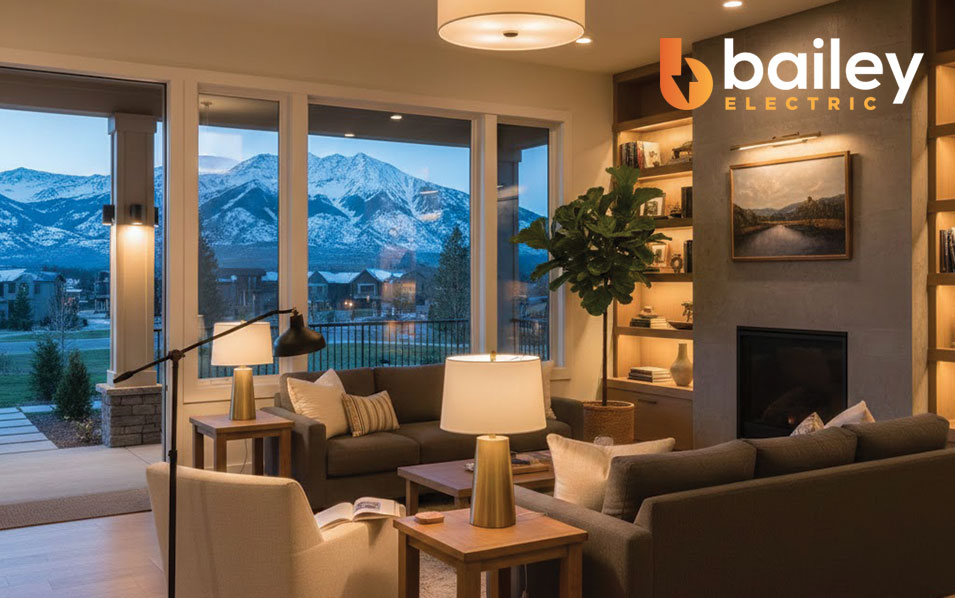
The living room is a multi-purpose space, so flexibility is key. Start with recessed lighting or a central chandelier on a dimmer switch (more on that later). Add a pair of table lamps on end tables to create a conversational circle of light. Finally, install picture lights or use adjustable recessed heads to highlight artwork or the fireplace.
If your living room has a ceiling fan, ensure the light kit isn’t your only source of illumination. If you need a ceiling fan installation updated to a more modern, integrated LED model, it can make a surprising difference in light quality.
The Kitchen
Kitchens need high functionality. Ambient light usually comes from recessed cans. For task lighting, under-cabinet lights are non-negotiable for illuminating countertops without shadows. Pendant lights over the island serve a dual purpose: they provide task lighting for food prep and act as decorative accent pieces.
Changing electric outlets in the kitchen to include USB ports or moving them to more convenient locations can also help clean up cord clutter, letting your lighting shine without distraction.
The Bedroom
Cozy is the primary goal here. Avoid bright overhead lights if possible. Instead, rely on bedside lamps or wall sconces for reading. If you have a seating area, a floor lamp adds a nice touch. Consider installing LED strips behind the headboard for a soft, hotel-like glow that serves as a nightlight.
The Secret Weapon: Dimmers and Smart Controls
You can have all the right fixtures, but if they are stuck at 100% brightness, you will never achieve true coziness. The ability to control light intensity is crucial.
Dimmer Switches
Installing dimmer switches is the single most effective lighting upgrade you can make for the price. They allow you to transition a room from bright and energetic during the day to soft and moody at night. Changing light switch hardware to compatible dimmers is a standard service that creates immediate impact.
Smart Lighting
Take it a step further with smart switch installation. Smart lighting systems allow you to create “scenes.” With one tap on your phone or a voice command, you can trigger “Movie Mode,” which might dim the overhead lights to 10%, turn off the kitchen pendants, and turn on the floor lamp. This level of control allows you to tailor the atmosphere instantly.
Common Wiring Challenges
Adding layers of light often requires updating your electrical system. Old wiring might not handle the load of new fixtures, or you might simply need power where there currently is none. This is where professional residential electric services become necessary.
- Circuit Overloads: If turning on the toaster and the new lamp trips the breaker, you likely need circuit breakers repair or a panel upgrade.
- Safety First: Installing accent lighting outdoors? You’ll need an electrician for exterior lighting to ensure everything is weatherproofed and grounded correctly.
- Outlet Placement: To avoid ugly extension cords running across your floor to power that new reading lamp, consider changing electric outlets or adding new ones exactly where you need them.
Don’t Forget the Exterior
Coziness shouldn’t stop at the front door. Exterior lighting sets the tone before you even step inside. Layering applies here too. Combine porch lights (task/ambient) with pathway lights (safety) and uplighting on trees or architectural columns (accent). Good outdoor lighting not only looks.
Sorry, the comment form is closed at this time.