

27 Feb Essential Steps to Teach Children About Electrical Safety
In an age where children are increasingly exposed to technology and electrical devices, teaching them about electrical safety is paramount. Understanding the basics of electricity and how to avoid potential hazards can prevent accidents and keep your little ones safe. Here’s a comprehensive guide to help you educate your children on electrical safety in an engaging and understandable manner.
Understanding Electricity
Before diving into safety measures, it’s crucial to explain what electricity is and its role in our daily lives. Strip the jargon and use simple terminology that children can grasp. Highlighting that electricity powers devices but can be dangerous if not respected is a key message to convey.
Basic Safety Rules
Start with the most fundamental rules that your child should follow. These include never playing with electrical cords, seeking an adult’s help to plug and unplug devices, and keeping electrical devices away from water. Create a set of household rules around these guidelines to ensure consistency and reinforcement.
Identifying Hazards
Teach your children to recognize and avoid common electrical hazards, such as frayed cords, overheating appliances, and electrical outlets. Demonstrate how to examine for signs of wear and tear and emphasize that if they see something wrong, it’s important to tell an adult right away.
Power of Outlets
Electrical outlets are intriguing to young minds, but unsafe exploration can lead to severe consequences. Explain the dangers of sticking objects into outlets and the existence of safety caps. Encourage them to never tamper with outlets and to alert an adult if they see any damage.
Dangers of Water and Electricity
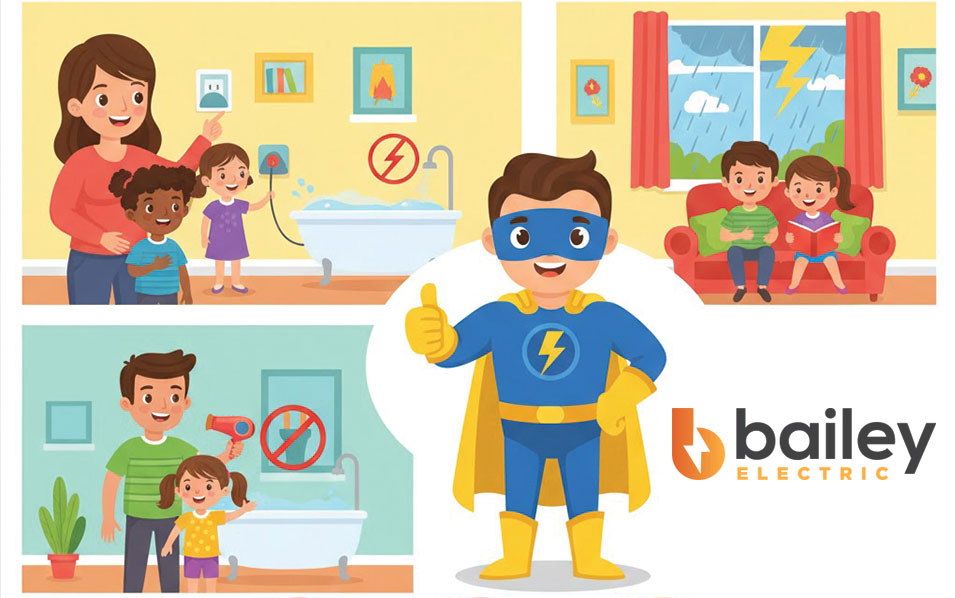
Children often fail to understand the risk of combining water and electricity. Use clear examples to illustrate the dangers, such as never using electrical devices with wet hands or near water sources. The “water and electricity don’t mix” principle should be ingrained from an early age.
[Image illustrating why water and electricity are a dangerous combination]
Lightning Safety
Safety indoors is as important as outdoors, especially during thunderstorms. Teach children that when they hear thunder, that signifies the presence of lightning, and they should stay away from windows and not take a bath or shower. These measures protect them from potential electricity-related incidents.
When to Ask for Help
Instill in your child the importance of asking for help when they have doubts about electrical safety. Role-play different scenarios where they should seek adult assistance, such as when a device needs repair or when they are unsure about how to safely operate an electrical item.
Implementing Safety Checks
Incorporate regular safety checks into your routine. Have children accompany you while you check that all appliances are turned off before leaving the house, and ensure they understand the purpose of these checks. This habit reinforces a proactive approach to electrical safety.
Reading Labels and Warnings
Many electrical devices come with labels and warnings about their use. Teach your children to read and understand these. Discuss what different symbols mean and why it’s important to follow the manufacturer’s instructions for safe usage.
Practicing Safety With Devices
Interactive learning can make safety practices more fun and memorable. Create a mock scenario or use their toys as “appliances” to show how to handle devices safely. Pair this with praise when they demonstrate good safety practices to reinforce the behavior positively.
Conclusion
Electrical safety education for children is a continuous process. Encourage open discussions about electricity and maintain a supportive environment where children feel comfortable seeking information and clarification. By taking the time to educate and empower them, you are equipping your children with lifelong safety skills. Remember, it’s never too early to start fostering an awareness of electrical safety—and it could make all the difference in an emergency.
Sorry, the comment form is closed at this time.